Handy sensor - List of Manufacturers, Suppliers, Companies and Products | IPROS

Handy sensor Product List

1~3 item / All 3 items

Displayed results

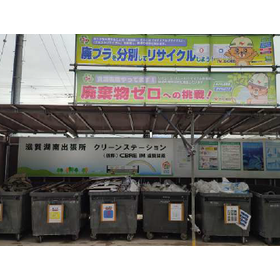
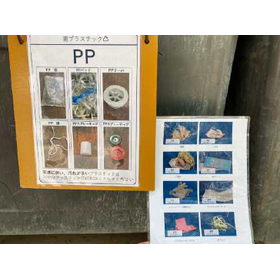
[Case Study] Achieving Waste Plastic Separation at Construction Sites Using Sensors! Nishimatsu Construction Co., Ltd.

Achieving plastic waste separation at construction sites! Improving material recycling rates through diligent sorting activities.

We would like to introduce a case study on the introduction of the "RICOH Resin Identification Handheld Sensor" in the efforts of Nishimatsu Construction Co., Ltd. for the separation of waste plastics. The company is promoting initiatives to enhance the accuracy of sorting on-site and aims to sequentially expand material recycling and chemical recycling from feasible areas, while exploring specific methods. By introducing our handheld sensor, it has become possible for anyone to sort waste plastics by using the sensor for identification and displaying samples with photos. 【Case Overview】 ■ Previous Challenges - At construction sites, waste plastics were disposed of in a single container and collected as is, with no initiatives for recycling being advanced. ■ Implementation Effects - It has become possible to instantly sort four frequently generated types of waste plastics, accelerating verification towards improving material recycling and chemical recycling rates. *For more details, please refer to the PDF document or feel free to contact us.

  • 3-2.PNG
  • 3-3.PNG
  • others
  • Handy sensor

Added to bookmarks

Bookmarks list

Bookmark has been removed

Bookmarks list

You can't add any more bookmarks

By registering as a member, you can increase the number of bookmarks you can save and organize them with labels.

Free membership registration

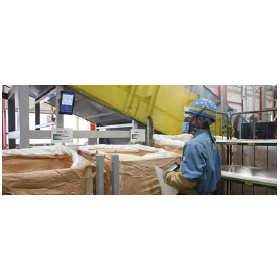
[Case Study] Halving Sorting Work Time! Toho East Japan Recycling Systems

The introduction of the compact and lightweight RICOH handheld sensor has halved the sorting work time and contributed to reducing the workload!

We would like to introduce a case study of the introduction of the RICOH Handy Sensor at Tohoku Region's East Japan Recycling Systems, which plays a role in the recycling of home appliances. At the company, the sorting work of key materials in the recycling process had been burdensome for workers due to the heavy weight of the previously used identification equipment. With the lightweight and compact RICOH Handy Sensor, workers can now keep the device in their waist pouch and continuously identify materials during work, significantly improving work efficiency. 【Previous Challenges】 - The weight of the previously used identification equipment was heavy, placing a large burden on workers. - The size of the identification equipment was large, requiring careful placement during temporary storage, which hindered smooth operations and caused stress. - When the type of resin could not be identified, workers had to check the most likely materials for identification results, leading to concerns about identification accuracy. *For more details, please download the PDF or feel free to contact us.

  • 【導入事例】分別作業時間を半減!東日本リサイクルシステムズ株式会社様2.jpg
  • Other resource recycling
  • Other analytical equipment
  • Environmental Survey
  • Handy sensor

Added to bookmarks

Bookmarks list

Bookmark has been removed

Bookmarks list

You can't add any more bookmarks

By registering as a member, you can increase the number of bookmarks you can save and organize them with labels.

Free membership registration

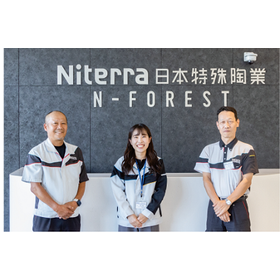
[Case Study] Successful "Monetization" of Waste Plastics through Sensor Utilization! Japan Special Ceramics Co., Ltd.

The introduction of the RICOH handheld sensor has successfully converted about 20% of waste plastic into "valuable materials."

We would like to introduce a case study of the introduction of the "RICOH Resin Identification Handheld Sensor" at Nippon Tokushu Tōgyō Co., Ltd. At the company's Komaki plant, 111 tons of waste plastic are generated annually, and until now, thermal recycling has been conducted. However, the company has decided to aim for the monetization of waste plastic. After the introduction of the RICOH handheld sensor, it became possible to accurately sort materials, allowing for the monetization of 20 tons of waste plastic out of the 111 tons. 【Previous Challenges】 - The company aimed to transition from thermal recycling of 111 tons of waste plastic to monetization. - To have recyclers accept the materials at a value, sorting by material type is necessary, but manual sorting has its limitations. - There was a lack of awareness about sorting waste that could be monetized among the production staff, necessitating a change in mindset across various production departments. *For more details, please refer to the PDF document or feel free to contact us. ★ Webinar Announcement! ★ We will also hold a webinar introducing other case studies. For more details, please refer to the related link or feel free to contact us. Date: December 11 (Wednesday) from 15:00 to 15:50 Participation fee: Free

  • img01.png
  • Other resource recycling
  • Other analytical equipment
  • Environmental Survey
  • Handy sensor

Added to bookmarks

Bookmarks list

Bookmark has been removed

Bookmarks list

You can't add any more bookmarks

By registering as a member, you can increase the number of bookmarks you can save and organize them with labels.

Free membership registration

Related Categories of Handy sensor